Leave Your Message
0%

In today’s fast-changing world of electronics, picking the right Ac-Dc Charger is super important if you want things to run smoothly. Dr. John Fletcher from Power Solutions Inc. puts it simply: “Choosing the right charger can really make a difference in how long your device lasts and how well it performs.” And honestly, that’s so true, especially with all the options out there, each one designed for different needs.

Figuring out what kind of Ac-Dc Charger you need can feel pretty overwhelming at first. There’s a lot to think about—voltage, current ratings, efficiency—and it’s easy to get caught up trying to find the best deal without sacrificing quality. Often, people miss some important details that could actually impact their devices in the long run. The charger you pick can either boost your device’s performance or cause headaches and malfunctions. The key is making an educated choice, which usually means doing a little research and trusting industry experts.

Don’t forget, it’s always a good idea to check out reputable sources and consider the manufacturer’s reputation before hitting that buy button. Trust and quality are tightly linked here. Sure, it might seem pretty straightforward at first, but choosing the wrong one can lead to unnecessary trouble. Spending a bit of time understanding exactly what you need and choosing well-known, reliable brands will end up saving you headaches—and maybe even some money in the long run.

How to Choose the Right AC DC Charger for Your Needs?

Understanding AC DC Chargers: An Overview

How to Choose the Right AC DC Charger for Your Needs?

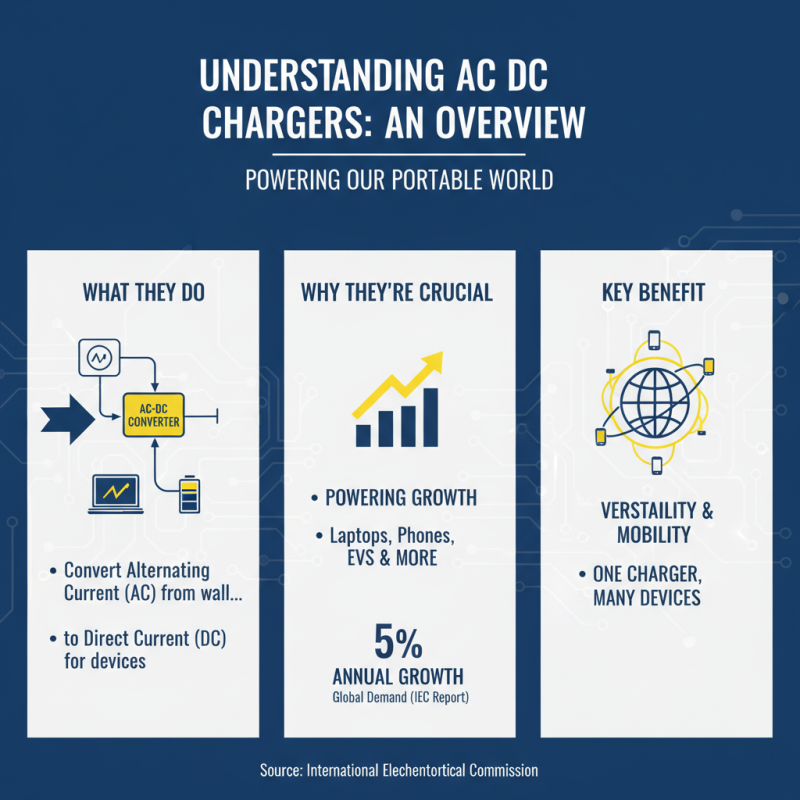
Understanding AC DC chargers is essential for meeting various power requirements. These chargers convert alternating current (AC) from the wall into direct current (DC) used by devices like laptops and batteries. According to a report by the International Electrotechnical Commission, global demand for AC DC chargers is projected to grow by over 5% annually, driven by the increasing number of portable electronic devices.

AC DC chargers vary in output voltage, current capacity, and connector types. For instance, most smartphones require chargers that output 5V and 2A. However, higher-powered devices might need chargers with 12V or higher outputs. A mismatch in voltage can lead to device malfunction or damage. It’s crucial to check the specifications to prevent costly mistakes.

Many consumers overlook the importance of efficiency ratings. The U.S. Department of Energy emphasizes that efficient chargers can reduce energy consumption significantly. Devices that draw too much power when not in use result in wasted energy and higher electricity bills. Selecting a charger with a good efficiency rating is often ignored, yet it is a critical factor for sustainability and cost-effectiveness.

Key Differences Between AC and DC Chargers

When selecting an AC or DC charger, understanding their key differences is crucial. AC chargers convert alternating current to use with various devices. They're versatile, often found in wall outlets. On the other hand, DC chargers provide a steady voltage and are ideal for batteries or devices requiring direct current. This distinction affects how efficiently your devices charge and operate.


Tips for choosing a charger: Consider the devices you regularly use. If you need a Rackmount Charger, ensure it’s compatible with your equipment. Look for specifications on voltage and current output. Higher efficiency can save energy and reduce costs.


Be aware of your environment. If you need portability, an AC charger is often lighter. However, a DC chargermay be more reliable for stationary setUPS. Evaluate your usage patterns. Sometimes, users overlook the importance of selecting the right charger, leading to inefficiencies or device damage.Make informed choices to enhance your charging experience.

Assessing Your Power Requirements for Charging

When selecting an AC DC charger, understanding your power needs is crucial. Start by considering the voltage and current requirements of your devices. Each device may have specific demands, which you can often find in the user manual. For example, a typical smartphone may require about 5 volts and 2 amps, while a laptop could need 20 volts and 2.5 amps. This variability means not all chargers will work for every device.

A Rectifier Charger converts AC power to DC, making it a common choice for various applications. Assess how many devices you plan to charge simultaneously, as this affects the total amperage required. A charger with too low an output might not charge all devices properly. If you notice long charging times or heat generation, it’s an indicator your charger isn’t suitable.

Take time to analyze your unique situation. If you switch devices frequently or have specific charging spots, portability and design factors also come into play. Many chargers vary in size and features. Reflect on your habits and needs. This helps ensure that your chosen charger will serve you well in the long run.

How to Choose the Right AC DC Charger for Your Needs?

Power Requirement (Watts) Voltage (V) Current (A) Charger Type Charging Time
50 12 4.2 AC to DC 2 hours
100 24 4.2 smart charger 3 hours
200 48 4.2 Rapid Charger 1 hour
75 15 5 AC to DC 2.5 hours
150 36 4.2 Smart Charger 2 hours

Compatibility: Matching Chargers with Your Devices

Choosing the right AC DC charger requires careful consideration of compatibility. Each device is designed to work with specific power requirements. Understanding the voltage and current ratings is essential. Chargers that do not match these specifications can damage devices or reduce efficiency.

When picking a charger, ensure it fits your device's needs. Check the voltage rating first. Using a charger with a higher voltage than your device can cause malfunctions. Conversely, a charger with lower voltage won't charge effectively. The current rating, measured in amperes, also matters. A charger providing insufficient current may charge your device slowly or not at all.

Tips: Always read the device manual before selecting a charger. If you have multiple devices, maintain a list of their requirements. It helps to avoid confusion and ensures you have the right charger on hand. Consider investing in universal chargers, which adapt to various devices. However, be cautious; not all universal chargers are equal. Always buy from reputable sources to ensure safety and reliability.

Safety Features to Look for in AC DC Chargers

How to Choose the Right AC DC Charger for Your Needs?

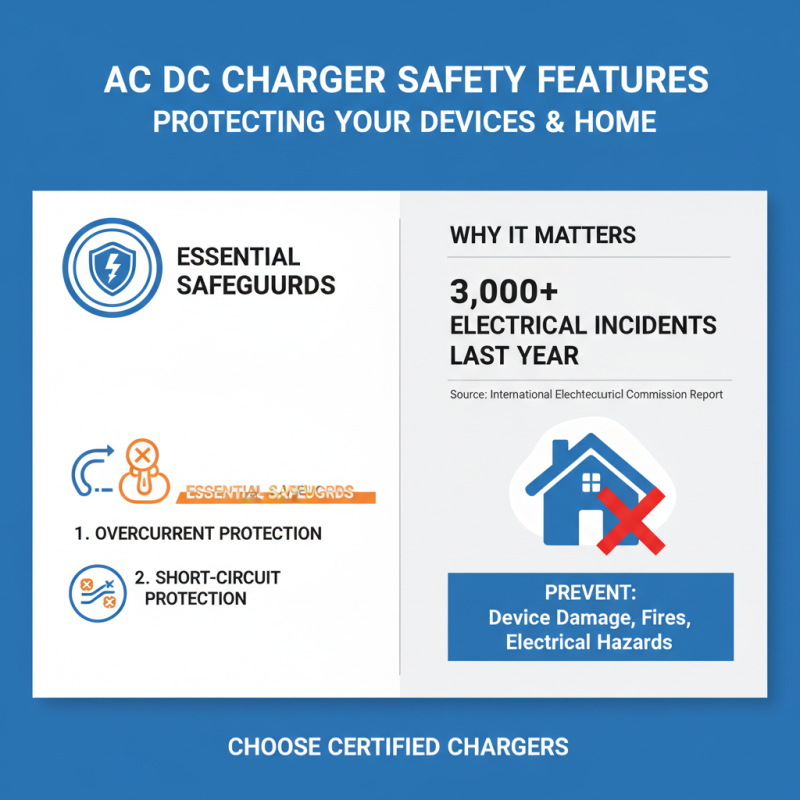
When selecting an AC DC charger, safety features are paramount. Chargers should have overcurrent protection to prevent damage to devices. According to a recent report from the International Electrotechnical Commission, ongoing electrical risks led to over 3,000 incidents in the past year alone. This emphasizes the necessity of built-in safeguards.

Another critical feature is short-circuit protection. Chargers without this may cause catastrophic failures. A recent study showed that about 25% of charger-related issues stem from shorts. Therefore, always check for this feature before purchasing. Effective thermal management is also essential. Chargers must operate under a range of temperatures without overheating. Monitoring devices’ temperatures can prevent serious hazards.

Tip: Review user feedback to understand real-world performance of chargers. Look for common mentions of safety issues. Doing so provides insights into the reliability of the product.

Always ensure that the charger meets established safety certifications, like UL or CE. These certifications are reliable indicators of quality. However, not every charger carries these marks. It leads to questions about their safety. Prioritizing known safety features can significantly minimize risks associated with charging devices.

Portability and Design Considerations

When selecting an AC DC charger, portability and design are crucial factors. Consider how often you will move the charger. A lightweight, compact design is ideal for travel. A bulky charger can become a hassle. Look for features like foldable prongs or a small form factor, which ensures easy packing in briefcases or backpacks.

The design must also meet your functionality needs. Look for clear indicators showing charging status. This eliminates uncertainty. Materials matter too; a sturdy exterior can withstand wear and tear, while a sleek design can enhance aesthetic appeal. A Li-Ion Battery Charger should balance performance with form.

Don’t overlook cord length; it impacts convenience. Short cords can limit where you charge. Long cords can tangle. It's essential to find a middle ground. Finally, while a charger may meet specifications, evaluate your experience using it in real-world situations. Practical feedback can refine your choice, making it more effective for your daily needs.

Tips for Purchasing the Right Charger Online

Choosing the right AC DC charger can feel overwhelming. When shopping online, focus on key specifications. Check the voltage and current ratings of your devices. Ensure compatibility with your equipment. Many chargers appear similar, but small differences can matter significantly.

Read user reviews carefully. They provide insights into reliability and performance. A charger may work well on paper, but real-world usage can differ. Look for products with solid warranties. This indicates manufacturer confidence.

Consider additional features. Some chargers are more compact, which is helpful for travel. Others may offer multi-device compatibility. A Solar Charger Inverter can enhance sustainability, but ensure it meets your power needs. Avoid impulse purchases. Reflect on your requirements before committing.

FAQS

: Why is it important to understand power requirements for chargers?

: Each device has unique voltage and current needs. This variability influences charger compatibility and performance.

What happens if a charger has low output?

A charger with low output might fail to charge devices properly, causing slow charging times and overheating.

What safety features should I look for in a charger?

Look for overcurrent protection and short-circuit protection to prevent device damage. These features are essential for safety.

How can I ensure a charger won’t overheat?

Effective thermal management is crucial. Check user reviews to see if overheating is a common issue with the charger.

Why are safety certifications important?

Certifications like UL or CE indicate a charger meets safety standards, helping minimize risks associated with charging.

How can I determine if a charger is reliable?

Review user feedback to identify common safety issues. This can provide valuable insights into the charger's real-world performance.

What should I consider if I switch devices frequently?

Portability and design are key factors. A versatile charger can accommodate various devices efficiently.

Can a charger be too powerful for a device?

Yes, overly powerful chargers can potentially damage devices. Always match the charger output with device requirements.

What is the downside of not considering safety features?

Ignoring safety features could lead to catastrophic failures and risks associated with electrical hazards.

How often should I analyze my charging habits?

Regular reflection on habits ensures that the charger you choose continues to meet your evolving needs over time.

Conclusion

Choosing the right AC-DC charger is essential for meeting your power needs effectively. Understanding the differences between AC and DC chargers, including their functionalities, can help you assess which type suits your devices. When evaluating your charging requirements, consider the wattage and compatibility with your electronics. It’s also crucial to look for safety features that protect against overcharging and overheating, ensuring a safe charging experience.

Additionally, portability and design are important factors to consider, especially for users on the go. When purchasing an AC-DC charger online, pay attention to customer reviews and product specifications to ensure you're selecting the best option for your needs. By taking these elements into account, you can make an informed decision and choose an AC-DC charger that effectively meets your charging demands.


Lila

Lila

Lila is a dedicated marketing professional with over a decade of experience in the field of energy storage solutions. With a deep understanding of lithium battery storage systems, bi-directional energy storage power supplies, Pure Sine Wave Inverters, marine inverters, vehicle inverters, and static......
Previous Best Lithium Battery Charger for All Your Needs?